Club rides
Clear ride formats, realistic pace guidance and a group-first approach from the first kilometre to the last.
Regular rides
| Ride | Typical distance | Character | Best for |
|---|---|---|---|
| Wednesday Evening Spin 18:30 | 45–55 km | Steady, compact, smooth group work | Regular riders and newer club riders building bunch confidence |
| Saturday Tempo 09:00 | 60–80 km | Brisker pace, rolling turns, planned regrouping | Riders comfortable holding pace in a group |
| Sunday Club Run 08:30 | 75–95 km | Steady endurance pace with a social finish | A broad range of members, normally separated into pace groups |
How pace groups work
We use pace descriptions as guidance rather than a promise of an exact average. Wind, terrain, junctions, group size and road conditions all change the final number. More useful than chasing an average is choosing a group whose effort level you can sustain while still riding predictably.
On steady rides, the priority is keeping the group cohesive. On firmer rides, riders should expect periods of sustained work and should be comfortable eating, drinking and communicating while moving. If the route contains major climbs, regroup points are agreed beforehand.
Ride-day checklist
- Roadworthy bike with functioning brakes and tyres
- Helmet and weather-appropriate clothing
- Spare tube or tubeless repair kit
- Pump or inflator and basic multi-tool
- Enough food and drink for the advertised distance
- Lights when conditions or finish time make them sensible
Group riding etiquette
Point out potholes, debris and other hazards with clear calls or hand signals where appropriate. Avoid overreacting to minor surface changes: a smooth line is normally safer for the riders behind than a sudden swerve.
Ride no more than two abreast where conditions permit and move into single file when road width, traffic or visibility makes that the considerate option. Leave enough room to respond smoothly, particularly in wet conditions.
At junctions, each rider is responsible for their own decision. A call from the front is information, not permission. Never follow a wheel into a junction without making your own check.
When rotating through, keep changes controlled. Do not surge as you reach the front and do not force another rider into the wind by overlapping wheels. A consistent effort helps everyone.
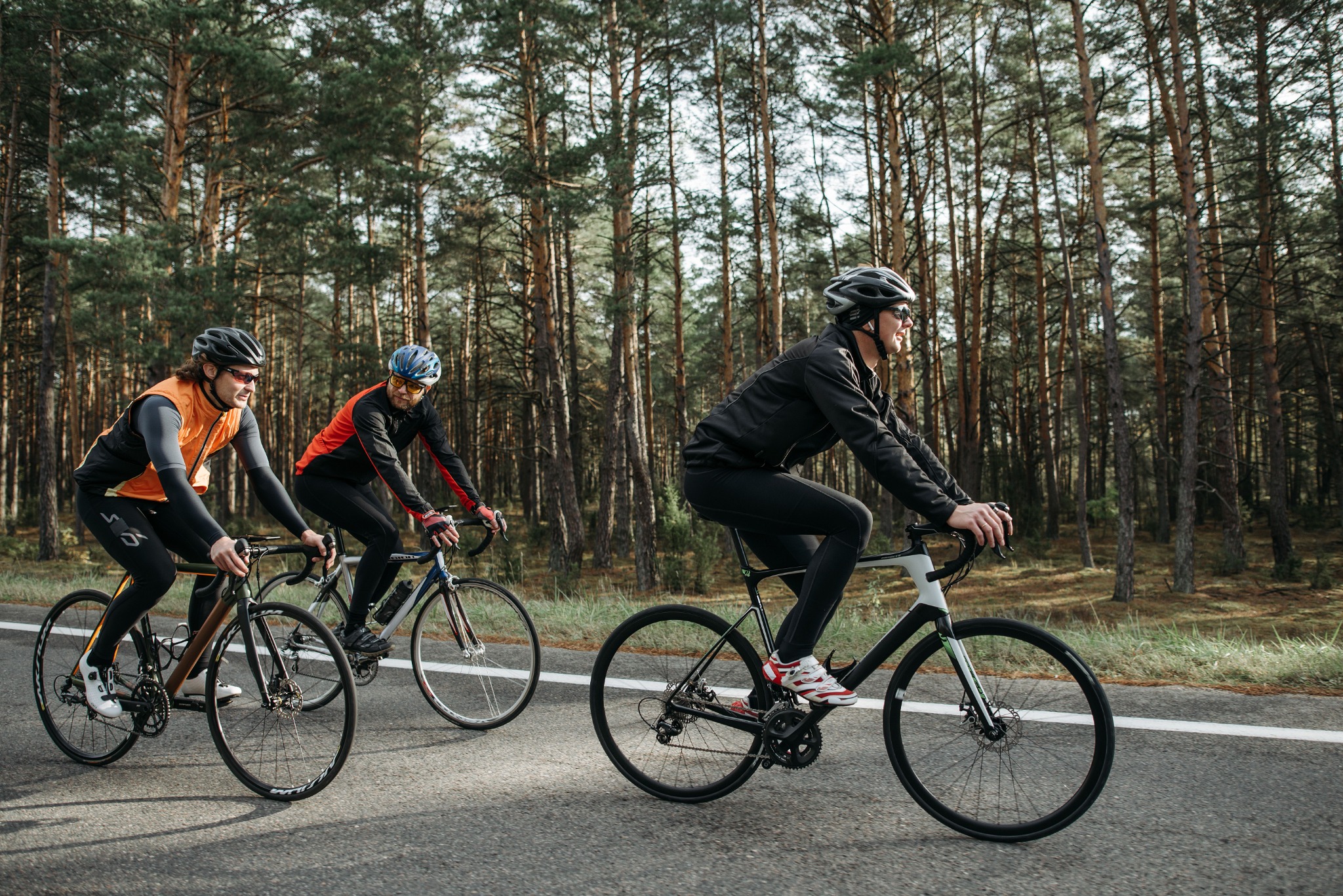
New to the club?
Tell us what sort of riding you do and we can point you toward the most suitable first group.